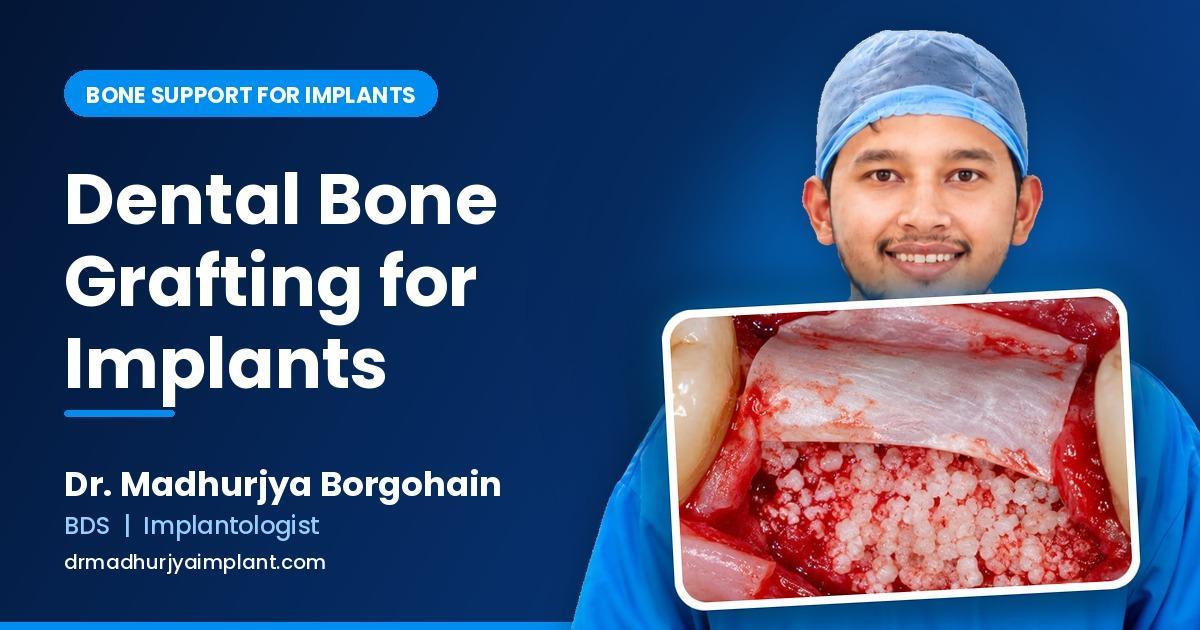

By Dr. Madhurjya Borgohain, BDS, Implantologist
If you have been told you do not have enough bone for a dental implant, bone grafting may be able to rebuild it. Missing teeth, gum disease, infection and long-standing tooth loss can all cause the jawbone to shrink, and grafting gives an implant a stronger foundation.
I plan implant treatment together with bone augmentation options that match your clinical needs.
What is dental bone grafting?
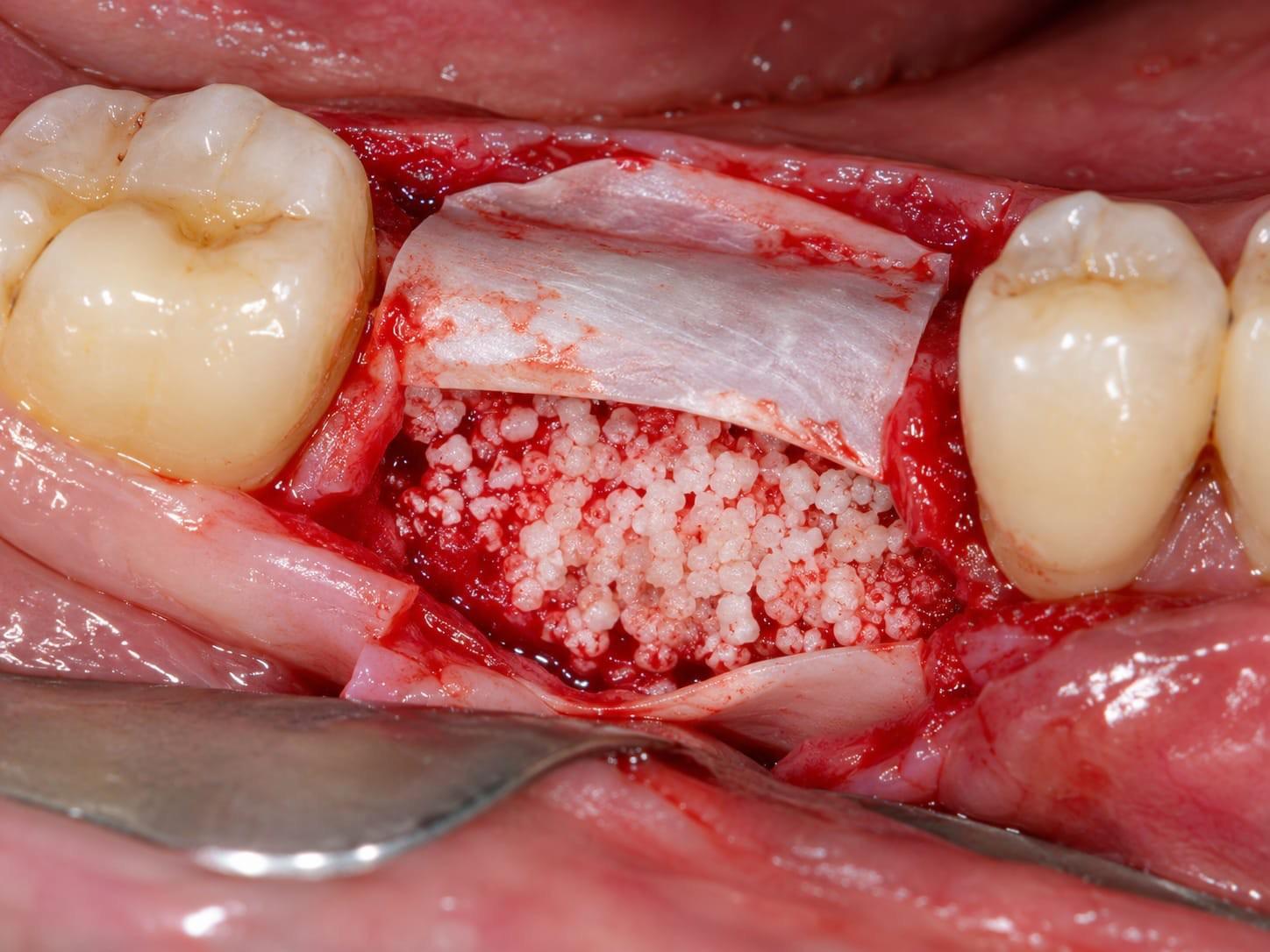
Dental bone grafting is a surgical procedure that uses bone or bone-substitute material to build up areas of the jaw that are too thin or too short. Depending on the material, the graft acts as a scaffold or provides a biological environment that helps new bone form.
When is bone grafting needed?
- The bone is not wide or tall enough to place an implant
- Bone has been lost after a tooth extraction
- Gum disease or infection has damaged the bone
- There are bone deficiencies around a planned implant site
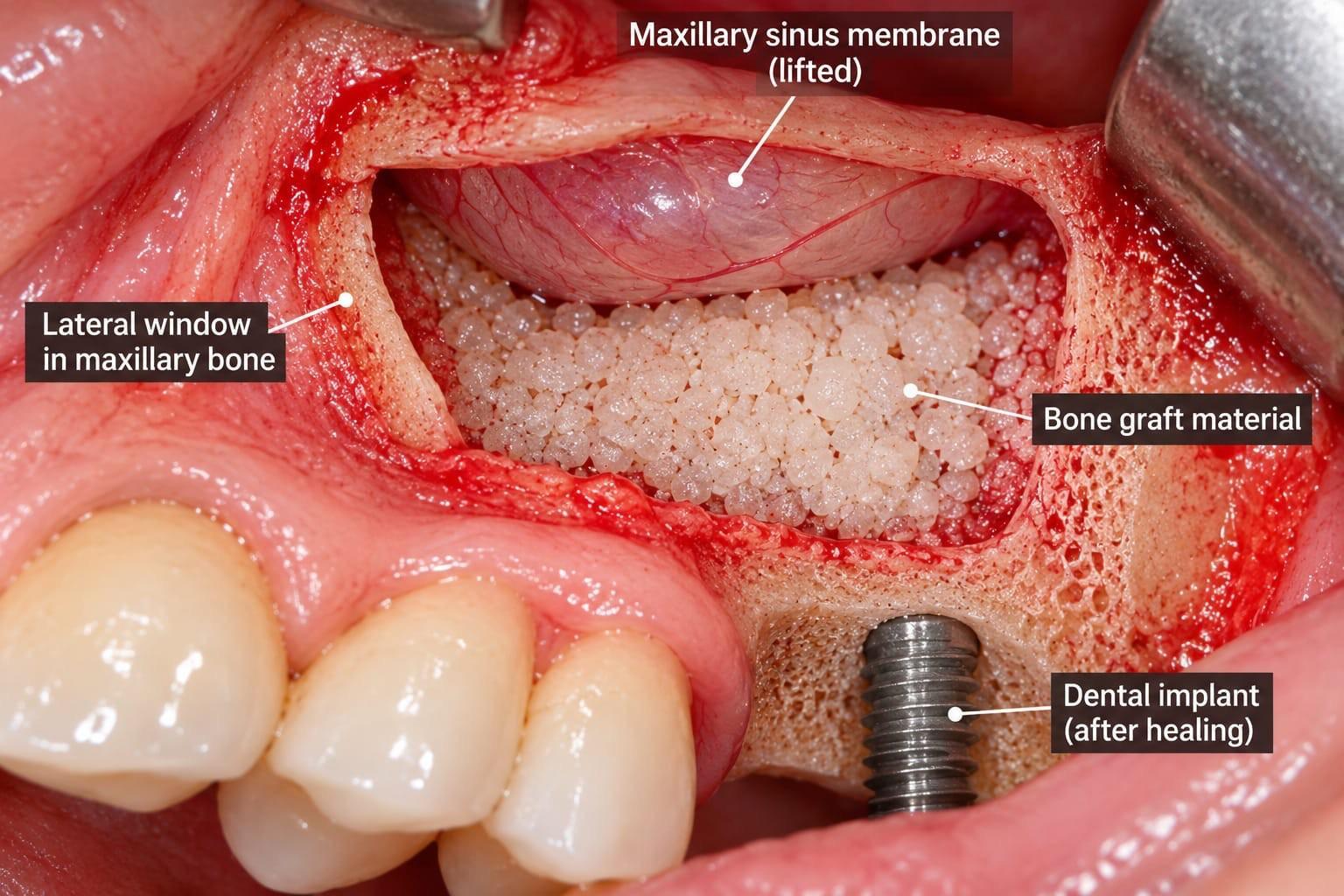
- The upper jaw needs a sinus augmentation
Types of bone grafting procedures
- Socket preservation: Grafting after a tooth is removed, to help limit the shrinkage of the socket.
- Guided bone regeneration (GBR): Graft material and a barrier membrane are used to help bone regrow in areas where it is deficient.
- Horizontal ridge augmentation: Widening a narrow jaw ridge so an implant can be placed.
- Vertical ridge augmentation: Increasing bone height in selected cases where a lack of height limits implant placement.
- Maxillary sinus floor augmentation (sinus lift): Increasing the bone height in the back of the upper jaw when it is clinically indicated.
- Autogenous bone grafting: Using bone taken from your own body in selected reconstructive cases.
Can I get dental implants without bone grafting?
Sometimes. In selected patients, different implant positions, short implants, tilted implants or advanced anchorage techniques can reduce the need for conventional bone augmentation. But when there is not enough bone support any other way, grafting remains an important and reliable option.
How I plan bone grafting
- Clinical assessment and CBCT evaluation when indicated
- Assessment of bone quantity and quality
- Prosthetically driven implant planning, starting from the final teeth
- Choosing the right grafting technique and material
- Placing the implant at the same time as the graft or after it has healed, depending on your situation
- Follow-up and long-term implant maintenance
Bone grafting FAQs
Does every implant patient need bone grafting?
No. Many patients have enough bone. It is recommended only when your scan and examination show it is needed.
Is bone grafting painful?
Any surgery involves some discomfort afterwards. Your plan will include how it is managed, and I will explain what to expect for your specific procedure.
How long does a bone graft take to heal?
Healing varies with the size of the defect, the grafting method, your medical history and other factors. I will give you a realistic estimate after your assessment.
Can the implant be placed at the same time as the graft?
In some cases, yes. In others it is safer to let the graft heal first. That depends on your clinical situation.
Book your bone grafting consultation
Find out whether bone grafting can make dental implants possible for you.
Bone grafting is not required for every dental implant patient. Treatment outcomes and healing periods vary according to defect size, grafting method, medical history and other clinical factors.