Single Tooth Dental Implant: Screw-Retained Crown Protocol & Recovery Guide

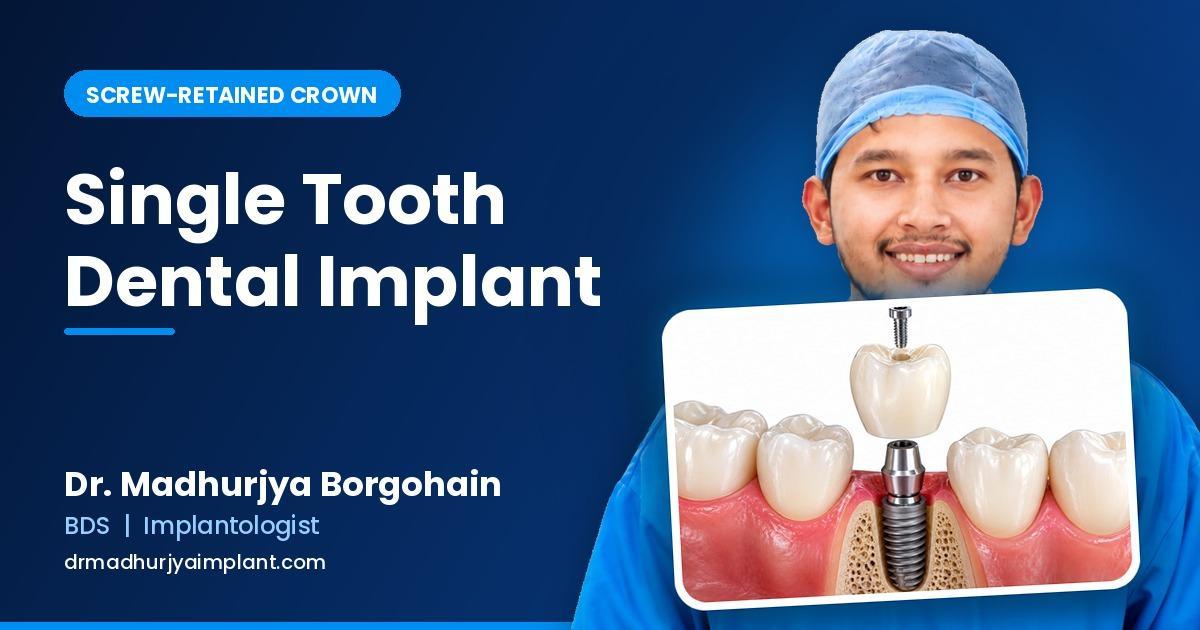
A single tooth dental implant replaces a missing tooth from root to crown using a biocompatible titanium post anchored into the jawbone and capped with a custom screw-retained zirconia crown. Unlike traditional dental bridges, single implants preserve adjacent healthy teeth without cutting them down and prevent long-term bone loss in the jaw.
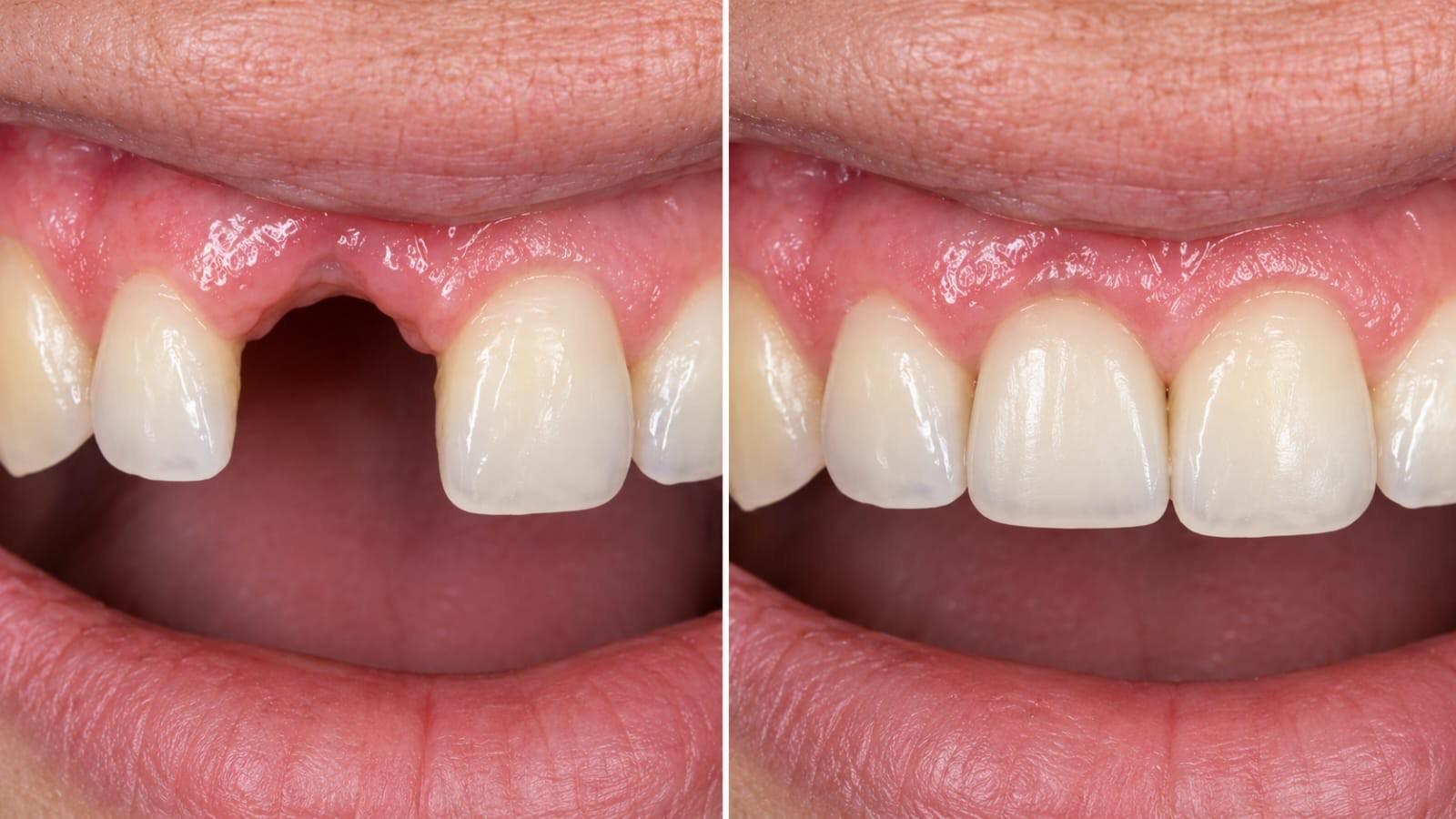
Losing a single tooth—whether from trauma, severe decay, or a failed root canal—creates more than just an aesthetic gap. Beneath the gumline, the surrounding jawbone immediately begins to resorbed, and adjacent teeth gradually drift inward, disrupting your natural chewing alignment.
In modern clinical implantology, our goal is not merely filling the visible space. It is restoring permanent bite stability, preserving bone volume, and delivering a prosthetic crown that can be easily cleaned, inspected, and serviced over a lifetime. That is why in my practice in Assam, my gold-standard approach for single tooth replacement is the screw-retained dental implant crown.
What is a Screw-Retained Dental Implant Crown?
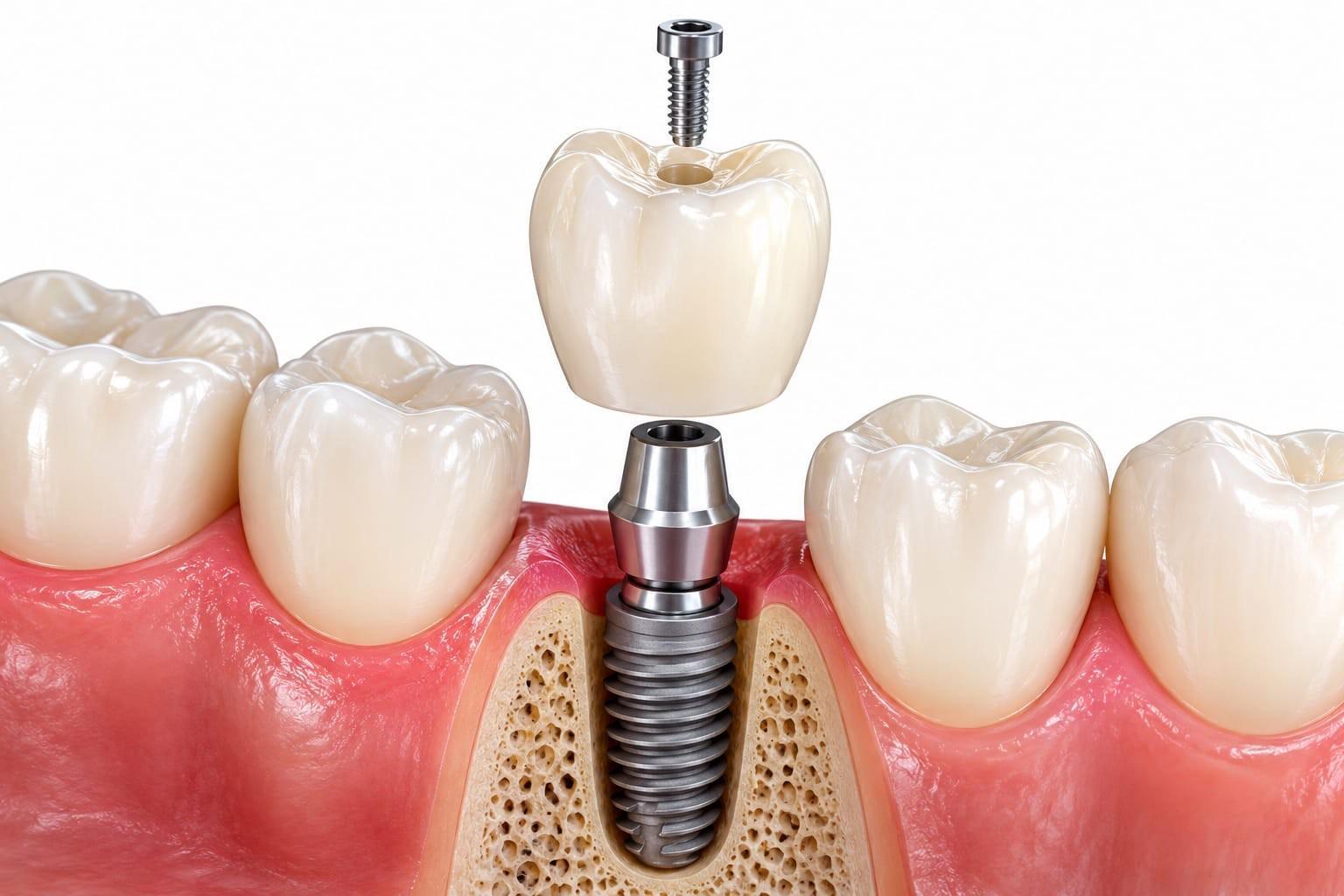
A dental implant consists of three distinct components:
- The Implant Fixture: A precision-threaded titanium cylinder placed directly into the jawbone that serves as an artificial tooth root.
- The Abutment: The structural connector that fastens into the internal core of the implant.
- The Prosthetic Crown: The custom zirconia or ceramic tooth that emerges above the gumline to restore chewing and smile aesthetics.
In a screw-retained implant crown, the crown and abutment are mechanically joined to the implant via an internal micro-prosthetic screw torqued precisely to 30–35 Ncm. A tiny screw-access channel on the chewing surface (or tongue-facing side) allows direct access and is invisibly sealed with tooth-coloured composite resin.
Why Dr. Madhurjya Recommends Screw-Retained Over Cemented Crowns
In traditional implant dentistry, many clinicians historically glued crowns onto implants using dental cement. However, clinical studies across the International Congress of Oral Implantologists (ICOI) have revealed serious biological complications associated with dental cement:
- Zero Risk of Cement Extrusion (Peri-Implantitis Prevention): When a crown is cemented deep below the gumline, excess cement inevitably squirts into the delicate microscopic collar around the implant. This residual cement cannot be seen or easily scraped away, harboring toxic bacteria that trigger peri-implantitis—severe bone loss that can destroy an otherwise healthy implant. Screw retention uses zero cement, eliminating this biological hazard completely.
- Effortless Clinical Retrievability: If your crown ever chips, if the screw loosens after years of heavy chewing, or if your gums require deep hygiene sanitization, I can simply un-seal the channel and gently unscrew the crown in minutes—without damaging the implant or surrounding bone. Cemented crowns, by contrast, must often be painfully drilled off and destroyed.
- Lifelong Maintenance Ease: Dental implants are mechanical medical devices. Having a retrievable connection ensures that your implant can be inspected, tightened, and serviced predictably decades down the road.
Single Tooth Dental Implant vs. Traditional 3-Unit Bridge
When patients visit our clinic in Dibrugarh inquiring about replacing a single tooth, their primary alternative is usually a conventional tooth-supported bridge. Below is the direct clinical comparison:
| Clinical Metric | Single Dental Implant | 3-Unit Dental Bridge |
|---|---|---|
| Impact on Adjacent Teeth | Zero damage. Healthy neighboring teeth remain completely untouched. | Destructive. 50–70% of healthy enamel must be ground down on both adjacent teeth. |
| Jawbone Preservation | Full preservation. Transmits bite forces into the bone, stopping bone resorption. | None. The bone underneath the false tooth gradually melts away over time. |
| Flossing & Hygiene | Normal. You floss between teeth exactly like a natural tooth. | Difficult. Requires threading special floss beneath the joined bridge units. |
| Typical Lifespan | 20+ Years to Lifetime with proper hygiene checkups. | 8 to 12 Years before decay under bridge anchors requires replacement. |
| 10-Year Success Rate | 95% – 98% | 75% – 85% (High root canal rate on shaved teeth) |
The 4-Step Clinical Treatment Process at Our Clinic
Every single tooth restoration follows a strict digital and surgical protocol built around patient comfort:
Step 1: 3D CBCT Radiography & Digital Planning
We perform a low-dose 3D Cone Beam Computed Tomography (CBCT) scan. This maps your exact bone height, width, bone density, and proximity to adjacent tooth roots and nerves, allowing us to plan the 3D trajectory of the implant on screen before surgery begins.
Step 2: Guided, Pain-Free Surgical Placement
Under gentle local anesthesia, a small osteotomy is prepared and the medical-grade titanium fixture is placed. Because we plan digitally, surgery is minimally invasive, typically taking under 30 minutes with minimal postoperative discomfort.
Step 3: Osseointegration (Bone Fusion)
Over the next 8 to 12 weeks, living bone cells attach and fuse securely to the microscopic titanium pores—a biological process known as osseointegration. If the missing tooth is in your smile line, an aesthetic temporary tooth is placed so you never leave with a gap.
Step 4: Custom Screw-Retained Zirconia Crown Delivery
Once stable integration is clinically verified, our lab crafts a monolithic zirconia crown perfectly matched to your natural tooth shade, translucency, and bite anatomy. The crown is torqued into place, and the tiny screw opening is sealed invisibly.
Single Tooth Dental Implant Cost Factors in Assam & India
In Assam and East India, a complete single tooth dental implant (including the titanium fixture, custom abutment, and screw-retained crown) typically ranges between ₹25,000 to ₹55,000. Key factors influencing investment include:
- Implant System: High-precision global systems (such as Dentium, Nobel Biocare, or Straumann).
- Crown Material: High-translucency multi-layered monolithic Zirconia vs Porcelain-Fused-to-Metal (PFM).
- Need for Socket Preservation: If a tooth is freshly extracted, minor bone grafting may be required to maintain ideal ridge width.
Frequently Asked Questions
Is a single tooth implant better than a traditional dental bridge?
Will the screw hole be visible on my front tooth crown?
Can a screw-retained crown come loose?
Do I always need a 3D CBCT scan before a single tooth implant?
How long does single tooth implant treatment take from start to finish?
Ready to Replace Your Missing Tooth?
Schedule a personal 3D evaluation with ICOI Fellow Dr. Madhurjya Borgohain at our advanced implant facility in Assam.